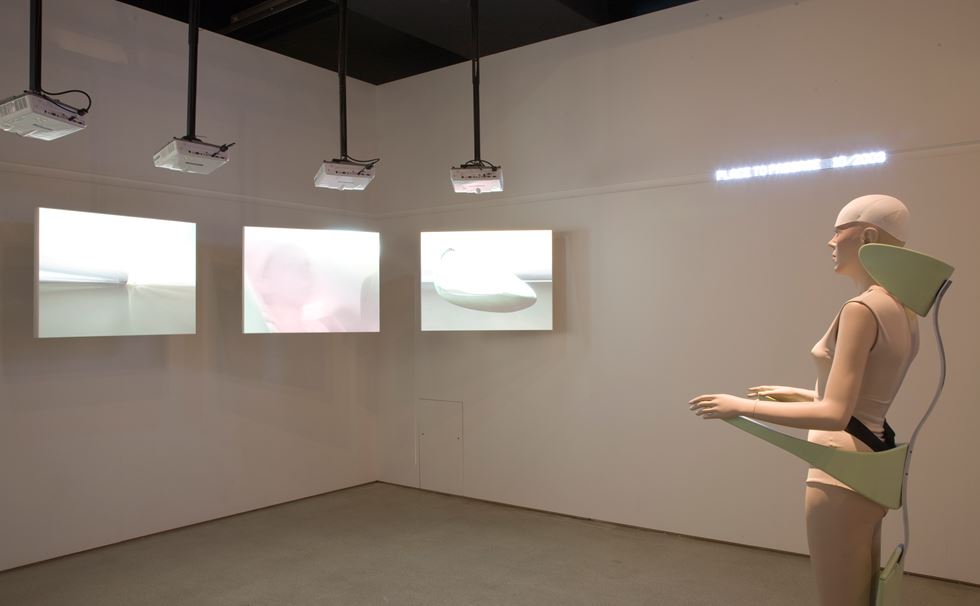
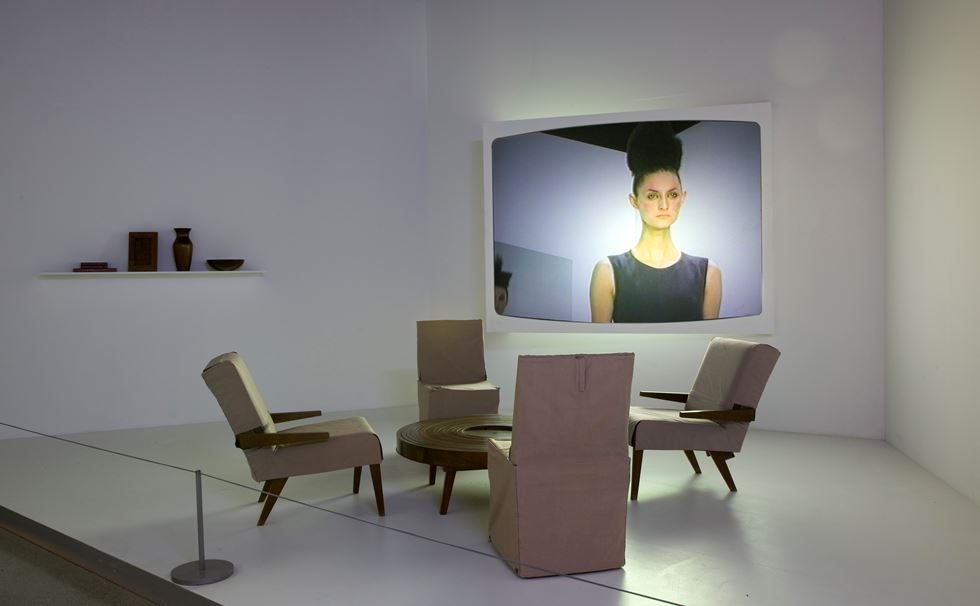
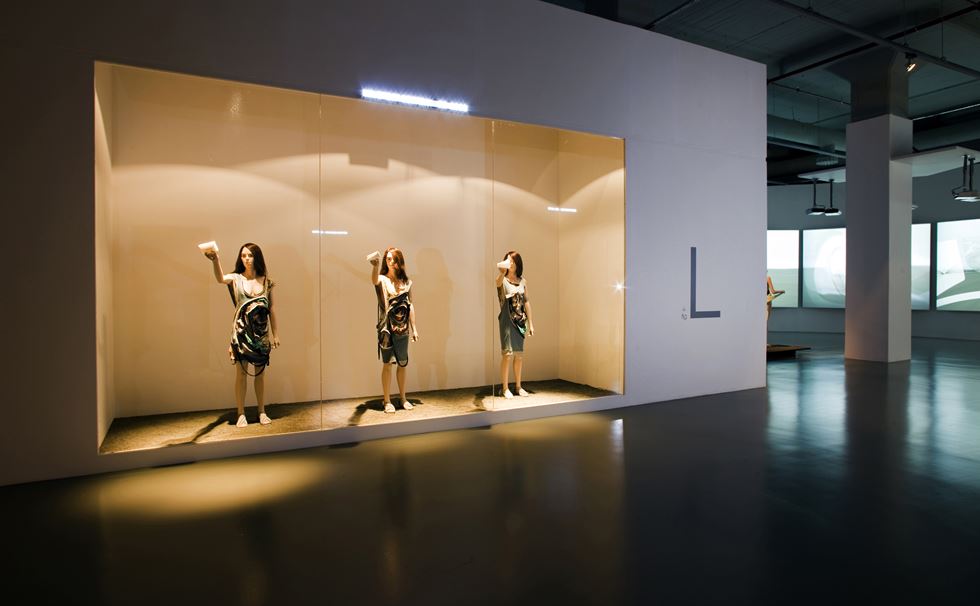
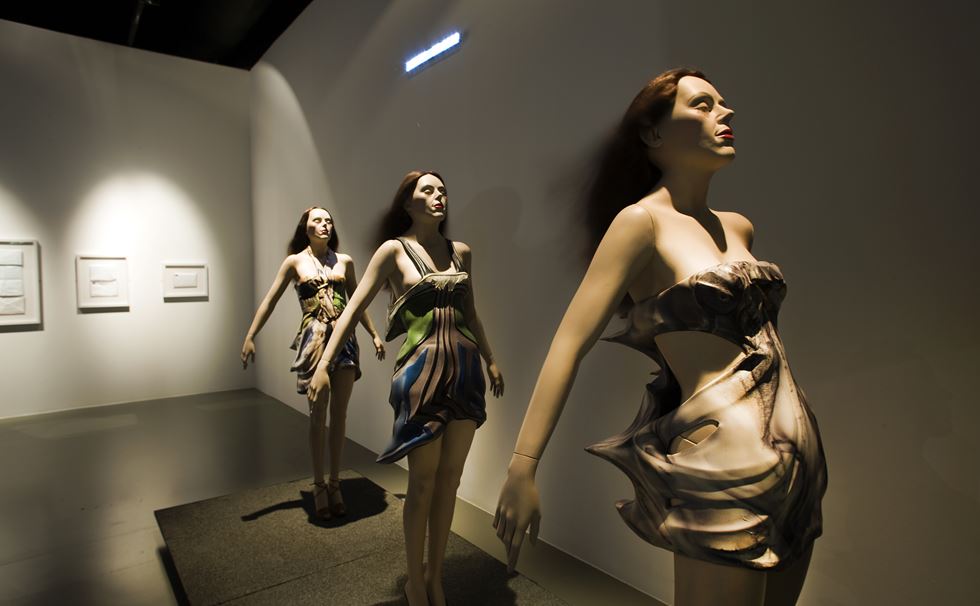
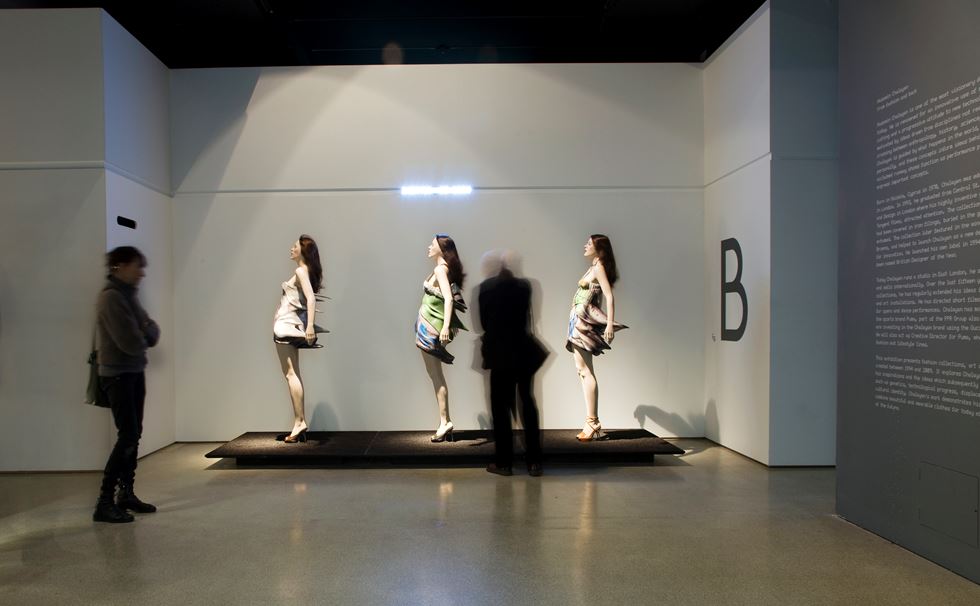
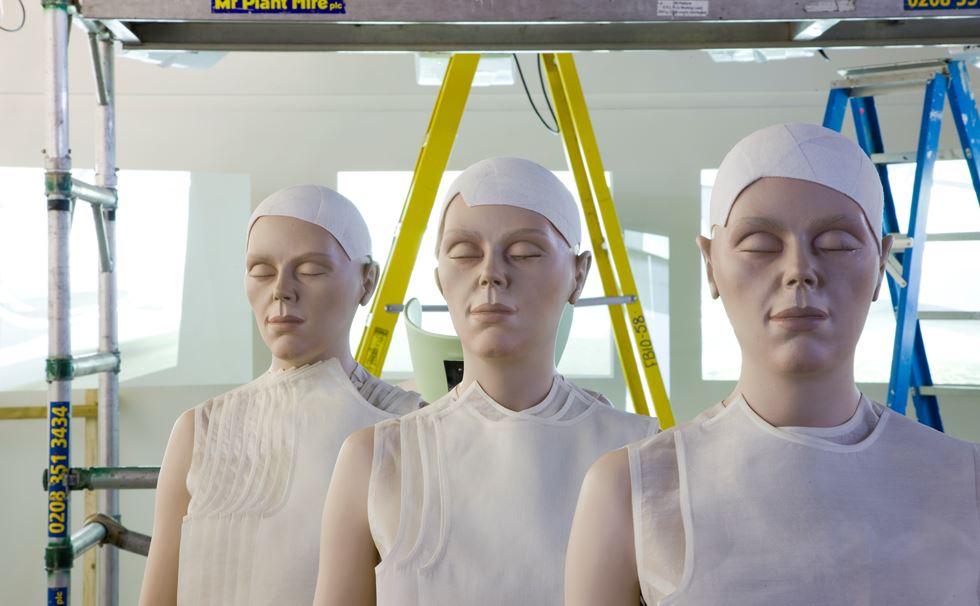
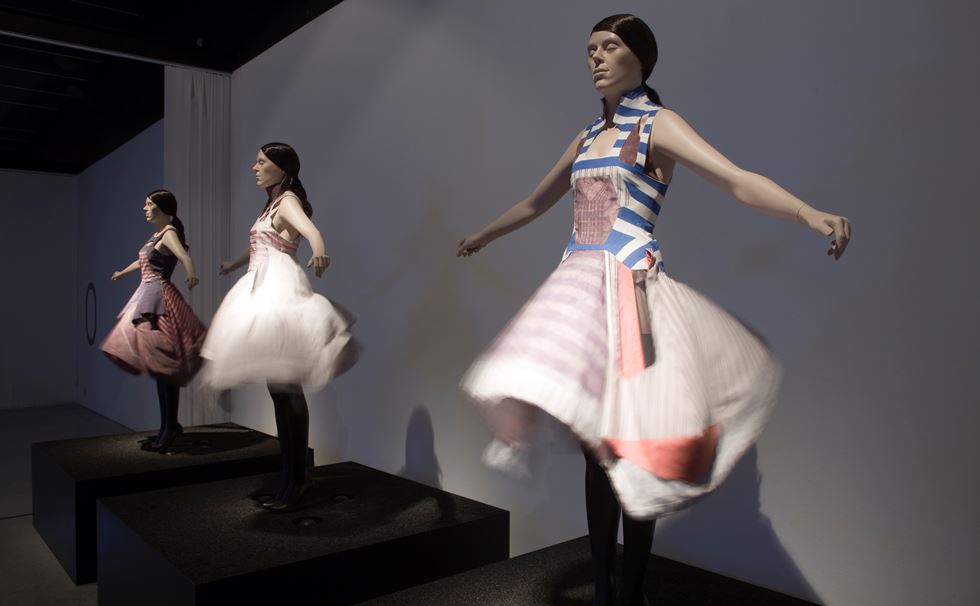
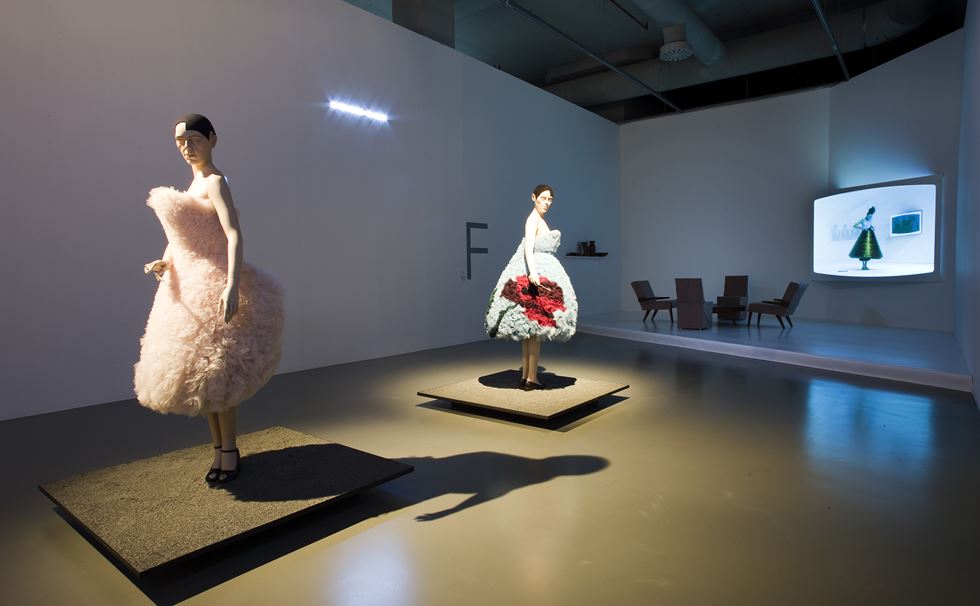
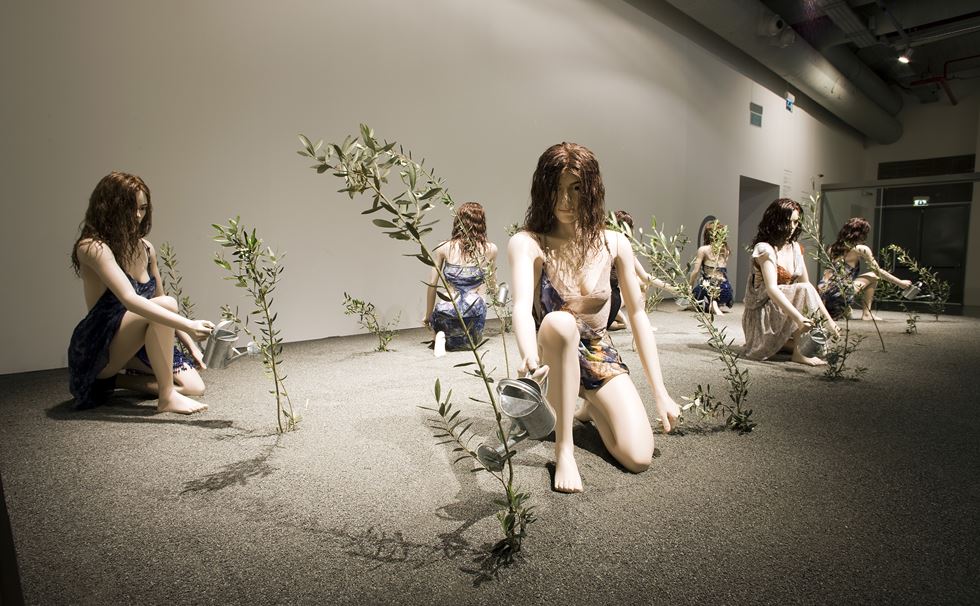
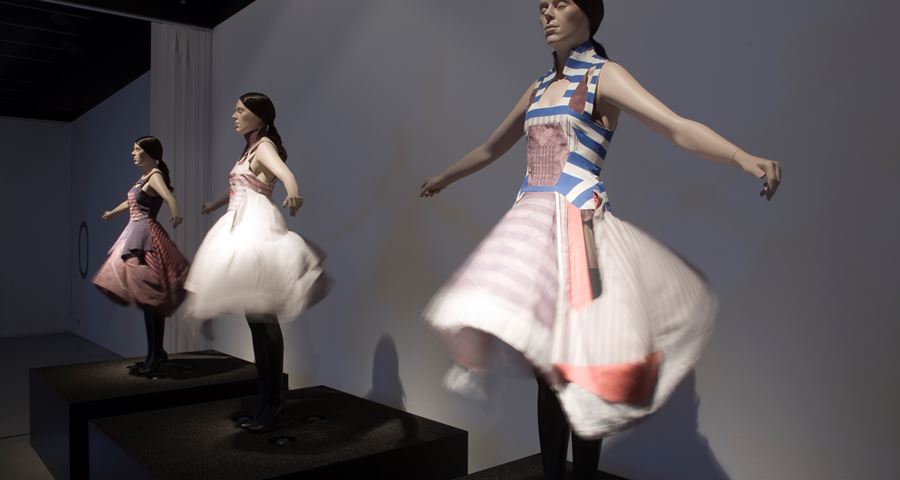
Hussein ChalayanFashion Designer (1970 - )Exhibiting at the Design Museum 22 January – 17 May 2009 Hussein Chalayan is one of the most visionary designers working in fashion today. His first UK retrospective From fashion and back currently showing at the Design Museum, illustrates his innovative use of materials, meticulous pattern cutting and a progressive attitude to new technology. His pioneering work is motivated by ideas drawn from disciplines not readily associated with fashion, crossing between anthropology, history, science, philosophy and technology. Chalayan is guided by what happens in the world, and by what engages him personally, and these concepts inform ideas behind his collections. His acclaimed runway shows function as performance pieces which allow him to express important concepts. Q. In January 2009, you an exhibition of your work opened at the Design Museum. What would you like this exhibition to achieve? A. This is the first time we have had such an extensive exhibition in London. We have had exposure at other museums and galleries but largely overseas. What the visitor sees in this show is how different worlds relate to each other, how everything is interconnected. My work is a reaction to things that happen in the world - history, anthropology, science, technology - it represents a merging of all these worlds which is what makes the work unique. I enjoy creating bridges between different worlds and disciplines. Visitors should not come with fixed expectations, this is not just a fashion exhibition but a tray of ideas. They will be exposed to clothing, then a film, then an installation and so on. People are not sure where to place my work – this exhibition presents an opportunity to readdress this. It is interesting when a school of architecture use Hussein Chalayan work as a basis for student projects – choosing garments based on geography, identity and culture and asking the students to create an environment based on these clothes. But academia is spreading beyond people who teach, more members of the public are appreciating the processes and research behind design. Q. Your work crosses so many different boundaries – art, architecture, fashion, film. How would you define your design philosophy? A. My work is about ideas. If I had to define my philosophy in just a few words, it would be about an exploration, a journey, storytelling – it is a combination of these things with suggestions and proposals at the same time. It is a quest into certain areas and proposing a way of looking at something. I am very much an ideas person which my team help me to realise. I am not a one-man show. When you are someone trying to create an idea, you don’t always have the means to make it practical first time round – the perpetual struggle of making a prototype and then making it real. Q. Explain the ideas behind your latest collection? A. The current collection in the stores is about evolution. It is an abstract storybook which takes you from the Big Bang through to Stone Age Man and the creation of tools up to modern times. I liked the idea of a narrative representation of what this might be, it is more of a filmic way of designing a collection.In many ways the clothes are by-products of the concepts I work with, monuments to the ideas. Q. Are there particular ideas or themes which you are keen to explore in the future? A. I have long term interests which I want to explore. I feel that with everything to date , I am just at the edge of the work, I could take projects a lot further. It is difficult to create anything that is long-lasting, you would have to make it your life’s work. I see my work not in terms of collections but in terms of projects, and I want to continue to work on these as an inspiring base for the clothes Q. How have you managed to survive in the fashion world and keep a business operating for almost 15 years? A. I started the collections in March 1994. We are constantly renewing ourselves which keeps me energised. I have taken up consultancies, exhibited work in museums and galleries and made short films. I see myself as a communicator. The commercial side can often be something which may seem to be neglected because of creativity but I also want our clothes to sell – there has been a misconception of my work, in the sense that people think of all that we do as “conceptual” and therefore un-wearable. I feel that this is due to the monumental pieces getting more exposure and the actual wearable clothes getting overlooked. We take a long time trying to achieve cut and precision. I think it’s often manifest if you try the clothes on. Q. When did your interest in fashion design first emerge? A. As a child, I developed an independent fascination for the body – I was so excited about anything to do with it. I was also brought up mainly by women which probably helped to fuel this I started to create narratives around the body. In my culture, a lot of emphasis is placed on going out and looking good, it is a hot environment –which also creates a sexual charge. I guess fashion for me was the closest thing which celebrated the body and that’s why I decided to study it. Q. Describe your early years growing up in Cyprus – how has your background influenced your work? A. I was born in Cyprus and came to London aged one. I returned to Cyprus when I was five for primary school then came back to London when I was twelve . I have spent most of my life in London but I consider myself a Turkish Cypriot coming from a country with a history of political turmoil, who has moved from one island to another. The more isolated you are from the rest of the world, the more curious you are, the more you want to discover. I have always been an innately curious person fueling this even further. The lack of resources in Cyprus meant that I was always building and making things, creating my own world. My family ties and values are also very important to me - warmth, encouragement, support - which is also echoed in my business relationships. I have a strong affinity to nature. I enjoy food, textures, plant life and animals. Most people who come from another region don’t always recognise the value of where they come from until they leave. You are then able to reflect objectively and want to celebrate those attributes. London creates the facility in which to reflect on your background from a distance. Q. How has your cultural background translated into your work? A. My work reflects a relationship between rural and urban culture, movements of people and the idea of migration, anthropology, history, cultural prejudice, a relationship with the earth. My work is a conversation, a constant state of discourse. Q. You have a particular affinity to the city of Istanbul? A. For me, Istanbul has always been the centre of the world where ghosts still live on. The past, present and future converge in one city - sitting between Europe and Asia and the birthplace of the Byzantine and Ottoman empires. It is a completely unpredictable city, spontaneous, energising; it is a maritime city, its connection to water is important to me I used to visit with my family during the winter months. My uncle settled in Istanbul and my father studied there, so it was the nearest cosmopolitan place to home. My mother was creative and very dextrous with her hands.My father studied as a computer programmer during the 1960s and then opened a restaurant. My grandfather owned an amazing art deco building in Nicosia which was an inspiration to all of us as chlidren.It combined a dance parlour, restaurant and cutural centre. Q. How important were your studies at Central St Martins? A. Really important – for me it was the ultimate fashion school largely because of the diversity of the people that were there and how the course was structured. It was a colourful environment and I liked the way in which different disciplines co-existed. I was there at the right time before everything became more segregated. The 'Tangent Flows' was my graduate collection. It was all about the Cartesian world view and Eastern philosophies. Q. Which collections are the most important to you? A. From the earlier chapters, Between and Afterwords have had the most exposure but I have learnt different things from each. Medea, my first collection in Paris, and the technology in One Hundred and Eleven are important to me. The media have responded positively to my work in the worlds of design and fashion but the work also appeals to other interests. Q. Which designers do you most admire? A. I love the work of Margiela, and historically Sybilla. Q. How would you describe your working process? A. It is very much about a narrative – a form of storytelling involving different themes which evolve from, or react to, the idea before. They can be monumental themes which I arrive at gradually. The shows are designed to be a cultural experience for the spectator, with sections reading as chapters. Q. How many collections do you design each year; describe a typical year in the Hussein Chalayan calendar? A. There are four main collections each year, Autumn/Winter and Spring/Summer together with two pre-collections. There are between sixty to seventy styles produced for each collection. I have a team of twelve which includes sales staff. I have recently taken up the Creative Directorship of Puma and will divide my time between designing for my own collection and working on ideas for Puma with a separate team. Puma is a lifestyle house, it is not a fashion house; interest in technology and ideas not readily associated with fashion will sit comfortably with Puma. Q. What does the future hold for Hussein Chalayan? A. The partnership with Puma presents an amazing opportunity to expand into new brand categories and move into retail - but in our language and while staying true to the brand. I want to take projects a lot further, reach more people. I would also like to make long-lasting art projects, deriving from them monumental pieces which can also become real objects you can use. Q. If you had advice for an aspiring fashion graduate just starting out, what would this be? A. I would say to get as much experience as you can in different aspects of the world outside clothes. Enrich your understanding of how we live, different cultures, what our needs are. The more experience you have outside of fashion, the more enriched you will be. Fashion is becoming a bigger business and there are so many new developments in the industry with new textiles, fabrics and exciting career opportunities. There is fashion PR and the media where you can be part of a team and still have an important role to play. People should explore what they are good at, rather than what they are told to do. For more information on Hussein Chalayan go to the website husseinchalayan.com For more information on British design and fashion go to Design in Britain, the online archive run as a collaboration between the Design Museum and British Council, at designmuseum.org/designinbritain Further reading Hussein Chalayan monograph (NAI Publishers - Groninger Museum; illustrated edition, 2005) Fashionable Technology (Springer-Verlag, Austria, 2008) © Design Museum |
BarberOsgerby
&made
Alvar Aalto
Tomás Alonso
Aluminium
Anglepoise
Pascal Anson
Ron Arad
Archigram
Art and Craft Movement
Assa Ashuach
Solange Azagury - Partridge
Shin + Tomoko Azumi
Maarten Baas
Georg Baldele
Jonathan Barnbrook
Luis Barragán
Saul Bass
Mathias Bengtsson
Sebastian Bergne
Tim Berners-Lee
Flaminio Bertoni
Jurgen Bey
Biba
Derek Birdsall
Manolo Blahnik
Leopold + Rudolf Blaschka
Andrew Blauvelt
Penguin Books
Irma Boom
Tord Boontje
Ronan + Erwan Bouroullec
Marcel Breuer
Daniel Brown
Robert Brownjohn
Isambard Kingdom Brunel
R. Buckminster Fuller
Sam Buxton
Fernando + Humberto Campana
Matthew Carter
Achille Castiglioni
Hussein Chalayan
David Chipperfield
Wells Coates
Paul Cocksedge
Luigi Colani
Joe Colombo
Committee
Concorde
Terence Conran
Hilary Cottam
matali crasset
Michael Cross + Julie Mathias
Joshua Davis
Robin + Lucienne Day
Christian Dior
Tom Dixon
Doshi Levien
Christopher Dresser
Droog
Charles + Ray Eames
Ergonomics
Luis Eslava
Established and Sons
Industrial Facility
Alan Fletcher
Norman Foster
FUEL
Future Systems
John Galliano
Abram Games
Giles Gilbert Scott
Ernö Goldfinger
Graphic Thought Facility
Eileen Gray
Konstantin Grcic
The Guardian
Martí Guixé
Zaha Hadid
Stuart Haygarth
Ambrose Heal
Thomas Heatherwick
Simon Heijdens
Jamie Hewlett
James Irvine
Alec Issigonis
Jonathan Ive
Arne Jacobsen
Jaguar
James Jarvis
Nadine Jarvis
Experimental Jetset
Craig Johnston
Hella Jongerius
Louis Kahn
Kerr Noble
Jock Kinneir + Margaret Calvert
Onkar Singh Kular
Max Lamb
Julia Lohmann
Ross Lovegrove
Berthold Lubetkin
M/M
Finn Magee
Enzo Mari
Peter Marigold
Michael Marriott
The MARS Group
Aston Martin
J. Mays
Müller+Hess
Edward McKnight Kauffer
Alexander McQueen
Matthias Megyeri
David Mellor
Memphis
Mevis en Van Deursen
Reginald Mitchell
Maureen Mooren + Daniel van der Velden
Eelko Moorer
Jasper Morrison
Jean Muir
Khashayar Naimanan
Yugo Nakamura
Marc Newson
Isamu Noguchi
norm
Chris O'Shea
Foreign Office Architects
Verner Panton
James Paterson
Phyllis Pearsall
Charlotte Perriand
Frank Pick
Amit Pitaru
Plywood
Gio Ponti
Cedric Price
Jean Prouvé
Ernest Race
Dieter Rams
Charles Rennie Mackintosh
Rockstar Games
Richard Rogers
Stefan Sagmeister
Peter Saville
Jerszy Seymour
Percy Shaw
Hiroko Shiratori
Tim Simpson
Cameron Sinclair
Paul Smith
Alison + Peter Smithson
Ettore Sottsass
Constance Spry
Superstudio
Ed Swan
Richard Sweeney
Timorous Beasties
London Transport
Philip Treacy
Jop van Bennekom
Sarah van Gameren
Viable
Vivienne Westwood
Matthew Williamson
Robert Wilson
Ben Wilson
Philip Worthington
Frank Lloyd Wright
Michael Young
|