Profile
Christian Louboutin
With their instantly recognisable glossy red soles, Christian Louboutin’s shoes have become an important part of the fashion landscape. Louboutin has built one of the most successful shoe brands in the world with a blend of craftsmanship and a distinctive kind of glamour. From razor sharp stilettos and lace-up boots to studded sneakers and bejewelled pumps, Louboutin’s designs carry his unique signature. They reveal an imagination driven by fantasy, nostalgia, playfulness and sex.
Louboutin was born in Paris in 1964. As a child, he recalls seeing a sign at the Museum of African and Oceanic Art showing a high-heel shoe, crossed out by a vivid red line. The image was intended as a warning, to protect the parquet floor from damage. But in an era of flat shoes and clunky wooden heels, it was like no shoe he had ever seen, and he never forgot the image of a needle thin heel. In his teens, his inspiration was the local cinema where he watched Marlene Dietrich, Bette Davis and Marilyn Monroe. After leaving school, Louboutin worked at the famous Parisian music hall, the ‘Folies Bergere’. He watched the showgirls from the wings, captivated by their flamboyant costumes and the way in which they performed effortlessly in towering heels.
In 1982, a meeting with the fashion director at Dior, led to an internship at Charles Jourdan. Having mastered the technical elements of shoe design, he worked as a freelance designer for a number of couture houses, including Chanel, Yves Saint Laurent and Maud Frizon. In 1988, Louboutin assisted the acclaimed shoe designer, Roger Vivier, on his retrospective exhibition at the Musée des Arts Décoratifs, Paris. He abandoned shoes for a time to work as a garden designer, until he heard about a newly available boutique in the Galerie Vero Dodat, close to the Louvre. It gave him the opportunity to return to shoe design and, on 21 November 1991, he opened his first boutique under his own name, with two friends as partners.
The Showgirl
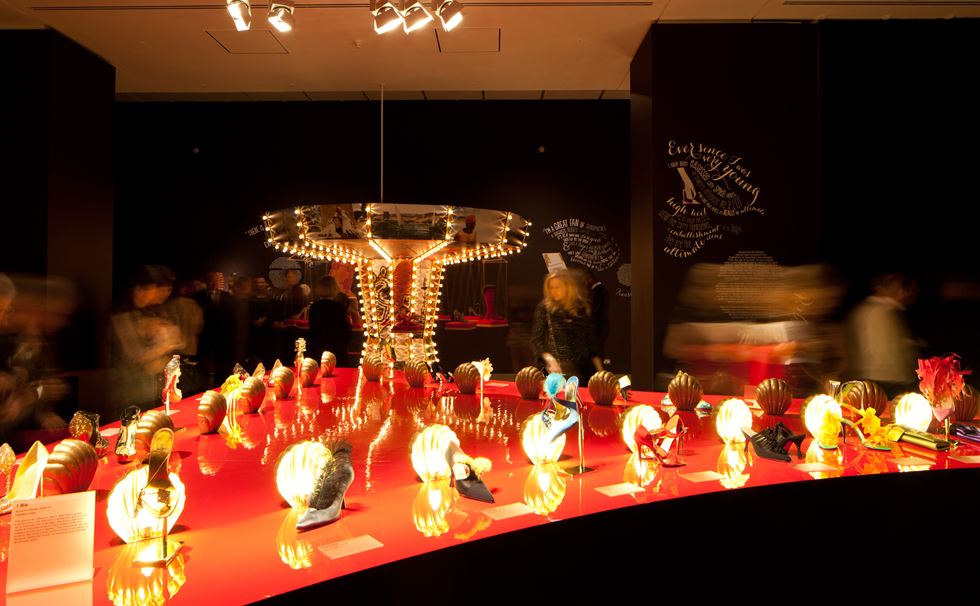
'Ever since I was very young, I have been obsessed with spike heels, the showgirls influenced me a lot. If you like high heels, it’s really the ultimate high heel — it’s all about the legs, how they carry themselves, the embellishment of the body. They are the ultimate icons.'
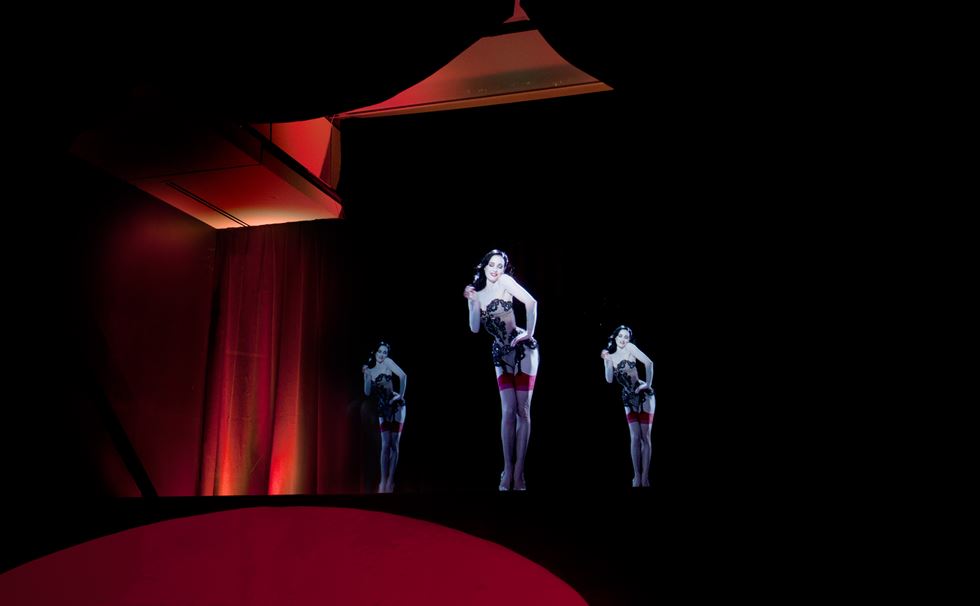
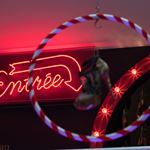
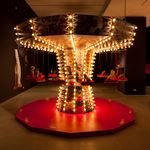
Theatre and the Parisian cabaret were Louboutin’s key inspirations for becoming a shoe designer. From the age of fourteen, he was a regular visitor to the Paris nightclubs to watch the showgirls perform, captivated by their flamboyant costumes adorned with vast feathers. In 1980, he was offered a job at the ‘Folies Bergere’. During this period, Louboutin would watch the dancers from the wings, fascinated to see how much they were transformed before they went on stage - to him they were birds of paradise.
Louboutin was especially interested in how the girls performed effortlessly in very high heels. It took years of practice to perfect the art of descending stairs in these towering spike heels. Louboutin’s working education derived from the showgirl. Dancer’s shoes were intended to highlight and extend the leg, rather than the foot. He learned how hidden platforms were placed inside the shoe to assist the wearer during their performance, whilst retaining the shoe’s appearance of fragility and lightness.
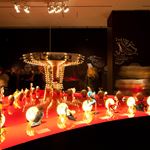
Many of Louboutin’s designs have been inspired by variety dancers. In a number of examples, the front of the shoe is left plain symbolising the dancer’s body but from the back, a sunburst of feathers emanates representing the showgirl with her tail of feathers.
Travel
'There is always something to see, including in places where you don’t expect to find anything. I try to look where others don’t.'
Louboutin has a passion for travel. He recalls, between the ages of twelve and fourteen, passing by a travel agent every day, where he would stop to pick up brochures. He would spend hours pretending that he was getting ready for a big trip, planning a detailed itinerary and consulting flight schedules. Between the ages of fifteen and twenty-one, he travelled to India every year and Indian influences have continued to feature prominently in his work.
Transparency
'I’m a great fan of transparency, because it suggests nudity. It’s as if things were designed directly on the body and that a layer had been removed, in this case the clothing. That’s what transparency is — applying onto the body things than then become part of it, like a tattoo.'
At the beginning of his career, Louboutin was designing shoes that were very dressy and which almost completely covered the foot. Increasingly, the notion of disrobing and nudity have become important themes in his work. Some shoes are very minimal in their design, lines are bare with the shoe appearing to be an extension of the leg. Louboutin’s choice of materials increases the illusion of transparency, and include veiling, chiffon, mesh, brocade and ribbon. His preference is for shoes that ‘undress’ to shoes that ‘dress’. For him, a successful shoe is one that preserves and accentuates nudity, leaving the foot as the object of desire.
Entertainment
'For me, the front and back of a shoe evoke two different aspects of femininity. The front is about poise, allure, stature, elegance, immobility: it's Marlene, always sublime from head-on, arched foot. The back is the gait, the movement, the heel: it's Marilyn who, moreover, was often shown from behind. There are thus two types of women with regard to shoes: those who symbolise the look, and those who symbolise the walk.'
Louboutin’s shoe designs reflect a lifelong passion for film, with many shoes named after his favourite Hollywood screen idols. As a teenager growing up in Paris, the films he watched were often from the 1930s, 50s and 60s, films featuring the great film and stage actresses of the time — Marlene Dietrich, Bette Davis, Gene Tierney, Mae West, Tallulah Bankhead and Marilyn Monroe. Louboutin regards these women as 'survivors' — strong women who can be put into any situation, manage just as well as men, and still be girls. His musical references are numerous and include Debbie Harry from Blondie and Tina Turner, who has inspired a number of shoe models bearing her name. These women and their iconic performances have been the inspiration for many of his designs. Louboutin often talks about the music of shoes, his favourite sound is the 'ping of mules' which to him evokes the touch of the black keys on a piano.
Architecture
'I’m a huge admirer of architects even if, for me, it’s a hellish job because you have people living, sleeping and eating in your designs — imagine the responsibility! Architecture is the world of lines, often playing with the light and the power of shadows. Architecture and shoes have many things in common — the heels play an architectural role for women as a pedestal. The heel is a column, transforming the arch of the foot much like a vault.'
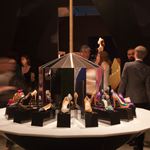
Louboutin draws repeatedly on influences from art, architecture and the landscape. The lines and curves to be found in elements of classical architecture and formal garden design have inspired the form of his signature shoe, the pump. The Pigalle was one of the first pumps designed by Louboutin and it has become one of his most popular designs.
His interest in gardens derives from time spent working on his own house, Champgillon, in the Vendée region of France. In the 1980s, Louboutin took the decision to leave fashion to take up landscape gardening. During this period he designed large terraces and smaller gardens in New York and Paris. It was the experience of devising planting combinations that inspired a greater appreciation of form, colour and texture in his work. Louboutin also greatly admires the rich colour and theatricality of Spanish painting, particularly the seventeenth century artists Zurbarán, El Greco and Goya. Many of his designs have been inspired by Pop artists of the 1960s, namely Andy Warhol and the work of American artist, Jeff Koons.
Handcrafted
'Handicraft is a common language with different forms of expression all over the world. My father was a fine cabinet maker. He used to tell me, 'wood has a grain, and if you want to do beautiful carvings, you have to work in the direction of that grain. If you go against this, you can only expect splinters’. For that reason, I worship handicraft and artisans. It is a school of respect.'
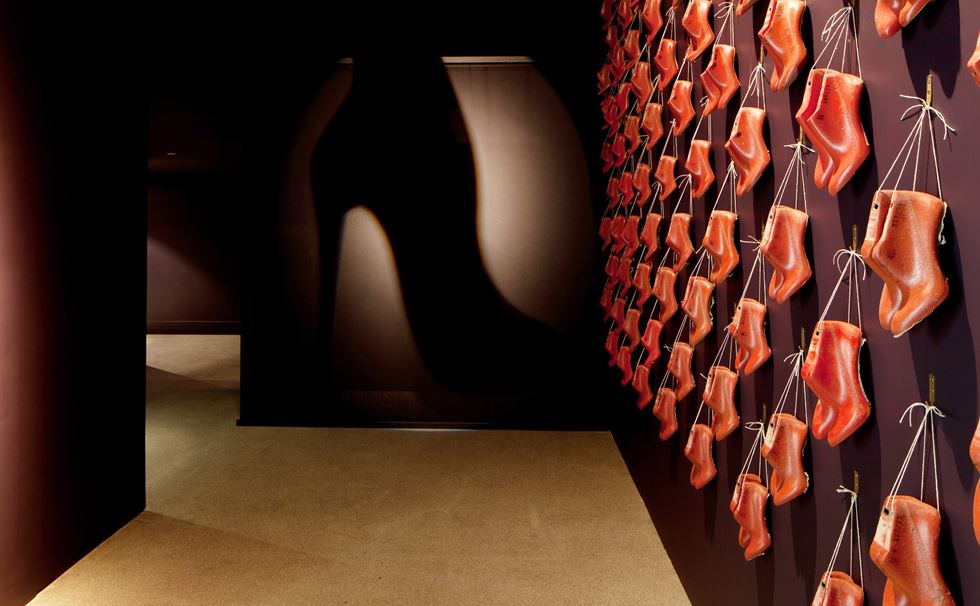
Each collection leads Louboutin to seek out artisans with particular skills, such as embroidery, leather or hammered metal. He always insists on handling relations between his company and the artisans personally, believing that it is important to work according to their method and timescale. It would be simpler and easier to manufacture shoes industrially in the factory with the help of laser cutting technology, but Louboutin believes there is no reason to deprive artisans who have mastered their craft of the pleasure they take in working with their hands. The principle of craftsmanship is that it is a living process, a constant evolution, as the artisan remakes an object.
Fetish
'Most people see shoes as an accessory to walk in, however some shoes are made for running… and some shoes are made for sex. If there was to be just only one fetish element in a woman’s wardrobe, I think it would have to be her shoes, even without being stilettos.'
In 2007, Louboutin collaborated with the filmmaker, David Lynch, to produce a series of shoes to be photographed for an exhibition, ‘Fetish’, at the Galerie du Passage, Paris. Louboutin created a number of shoe-like objects that were not intended to be worn. They were more like sculptures, to be admired as one-off fetishistic objects and celebrated the arch and the in-step of a woman’s foot. David Lynch conceived a set that was based around a sofa, long stem roses, and a floor light. They selected two dancers, Nooka and Baby, from Parisian cabaret, ‘The Crazy Horse’ chosen for the very particular arch of their feet. With pale skin, dark eyes and red lips, and set within a dark decor populated with shadows, the dancers moved seemingly effortlessly in the apparently unwearable shoes. Lynch used moving and super-imposed shots which gave a final impression that the foot was bursting into flames.
The Atelier
'I have no sense of minimalism — it’s not at all me. I absolutely need objects around me. I couldn’t live in an empty space — as far as I‘m concerned, that's the definition of prison.'
Louboutin’s Paris atelier is filled with objects he has brought back from his travels. He is an avid collector and always finds time to visit market and bazaars wherever he is in the world. Flooring from Damascus, carved wooden doors from Mexico, feathered headdresses from Brazil, replica sphinxes and obelisks from Egypt, Indian Bollywood posters, Czech beads and British Wedgwood china cover surfaces and adorn walls. The central table, at which Louboutin works, carries an assortment of objects including a Perspex box of different coloured heels, various prototype shoes and a special edition Cat Burglar Barbie, designed by Louboutin for Mattel in 2011, wearing a black latex catsuit and sandals. In his designs, Louboutin pays particular attention to lines, curves and materials in his work, which he says derives from the interest he has always had in objects.
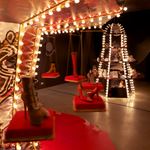
In the corner of the atelier hang two trapeze bars on which Louboutin practices when he has the time. The trapeze has been Louboutin’s passion for the past twenty years. He signed up for a trapeze class in Paris after seeing the 1987 Wim Wenders film ‘Wings of Desire’, in which a circus acrobat entices an angel down to earth — 'there’s something about moving through space, being lifted through the air, it completely clears your mind, it’s a real escape.'
Designing the Shoe
'Ninety per cent of my shoes start with a drawing. The complicated but very important thing is to remain as faithful as possible to the original design.'
Some designers, when they begin to draw, might have a very specific idea in mind, but when Louboutin starts to draw, it is the pleasure of drawing itself that brings him ideas. He can spend many hours drawing each day for a week or two at a time. At this stage, Louboutin gives his imagination free reign, planning to resolve any technical solutions later with his team.
Each year Louboutin designs two collections. During the design process, weather and light have a huge impact on Louboutin. He designs the Autumn/Winter collection in a colder climate, usually in a chateau in Champgillon, France or at his house in Portugal where he typically turns off the heating. The Spring/Summer collection is often designed in Egypt, close to the Nile, as it is easier for him to imagine sandals when working in the sun. Real creative work is done in the morning; during the afternoons and evenings he revises designs and works out solutions to problems. Once the sketches of the shoes in a collection are completed, working drawings are produced and sent to a small factory located at Parabiago, just outside Milan. Louboutin usually stays in Italy for about a week to work on prototypes, oversee fittings and perfect the new designs.
'As a designer, my inspiration has remained the same over twenty years but there has been a revolution in the design of the shoe. During the first ten years, I was creating shoes that were much more dressy, now they are much more sexy. This is really the ‘ying’ and ‘yang’ of my work — to combine sexiness with elegance.'
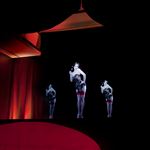
In 2012 Louboutin celebrated twenty years as a shoe designer. He returned to the world of cabaret, with a new production for the famous Parisian club, ‘The Crazy Horse’. Louboutin was invited to become the club’s first ‘guest creator’ to give a fresh interpretation to ‘The Crazy’ show. Working with a team of distinguished artists and choreographers, he has directed four original and unique tableaux for their new show ‘Feu’, which offers a very personal look at femininity in all its forms.
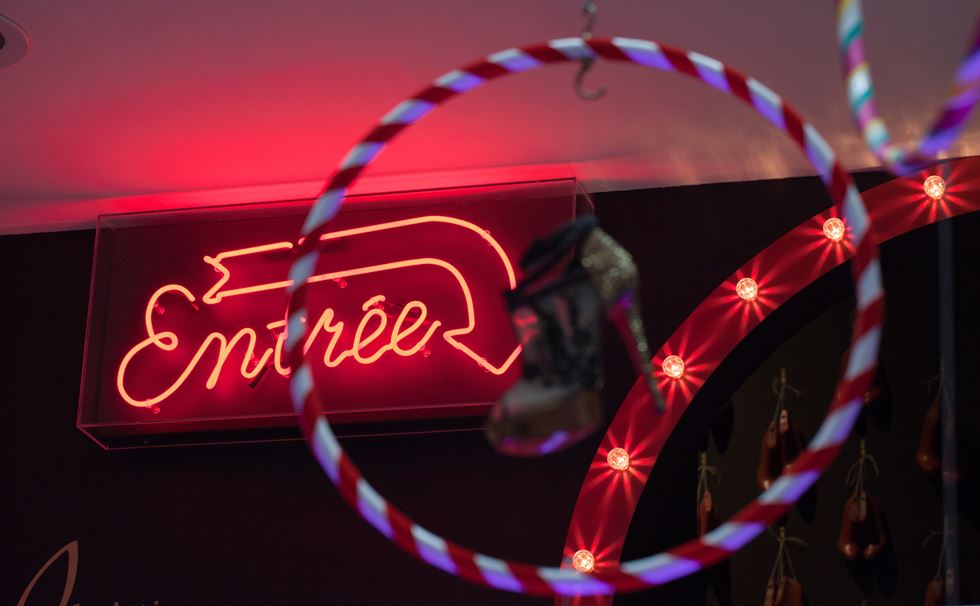
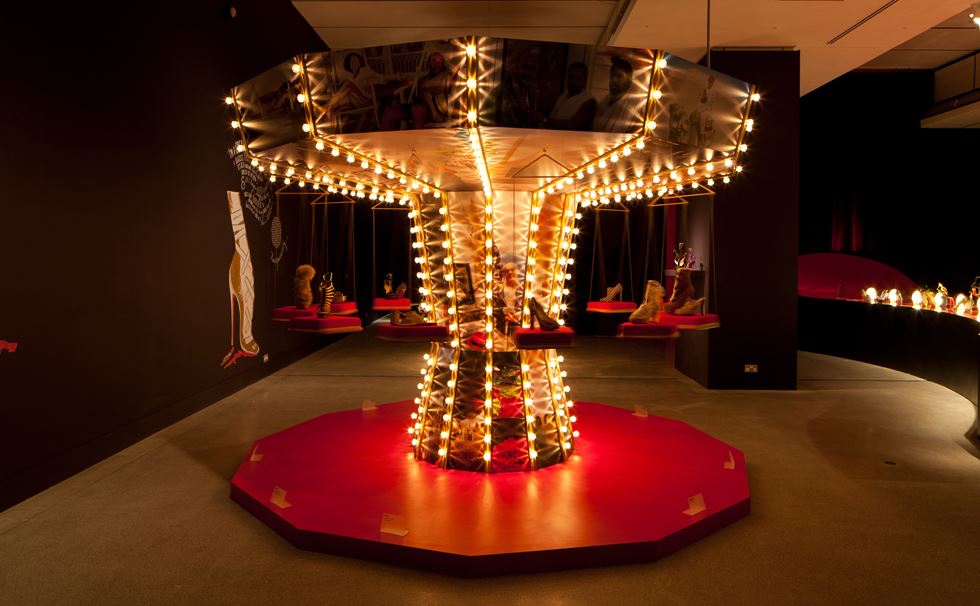
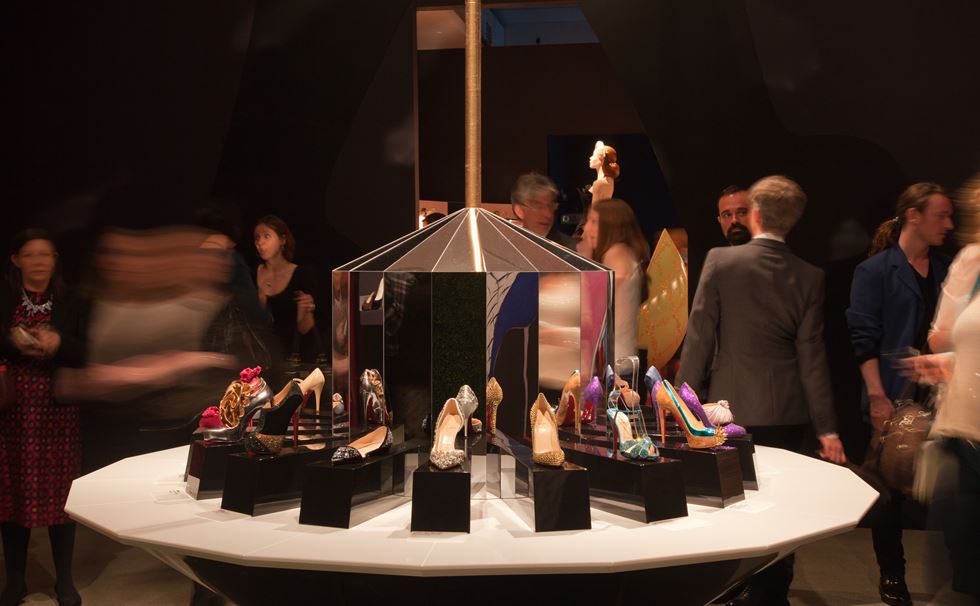
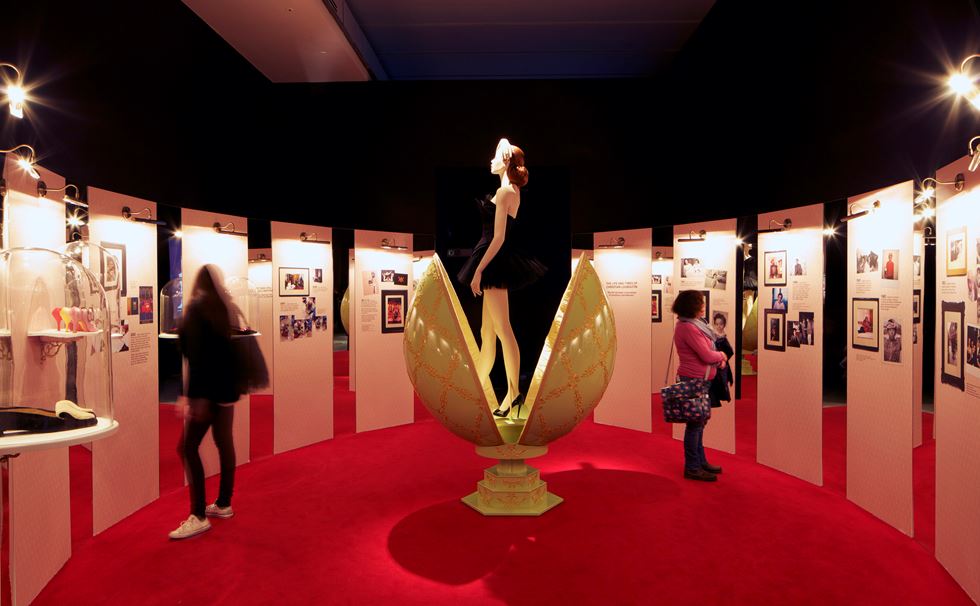
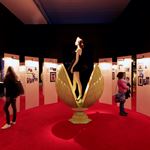
Design Museum Exhibition (2012)
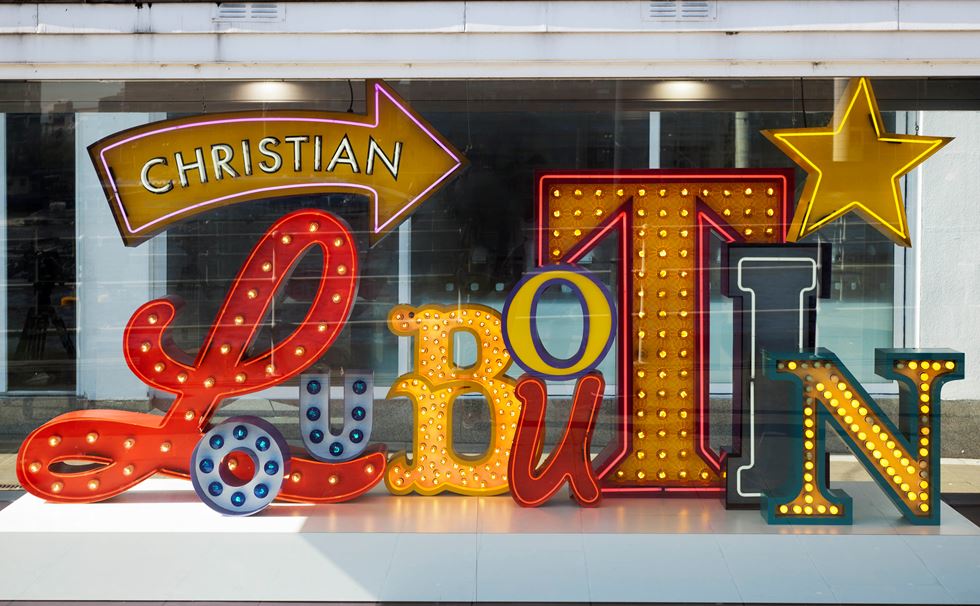
Christian Louboutin: 20 Years
Image credit: Luke Hayes